The Two-Metre Reality: Why You Don't Need a Home Gym
Most people imagine that a productive cardio session requires a treadmill, a spin bike, or at least enough space to perform wide-ranging lateral movements. In reality, you only need approximately two square metres of floor space to elevate your heart rate to anaerobic thresholds. If you can stand up and stretch your arms out without hitting a wall or a piece of furniture, you have enough room for an intense, circuit-style workout. The secret is not in the equipment, but in the selection of movements that focus on vertical displacement rather than horizontal travel.
Working out in a confined space actually forces better form. Because you cannot rely on momentum from running or broad jumps, you are compelled to use explosive, controlled movements that engage the core and stabilisation muscles. This transition from "space-hungry" cardio to "micro-space" conditioning changes the nature of your training, often making it more effective for building functional endurance in a shorter amount of time.
Selecting the Right Movements for Restricted Footprints
When you have limited floor space, the primary goal is to avoid any movement that requires a significant running start or a wide lateral stride. The best cardio circuits for small spaces utilise three distinct planes of motion: vertical (jumping), horizontal (plank-based), and rotational.
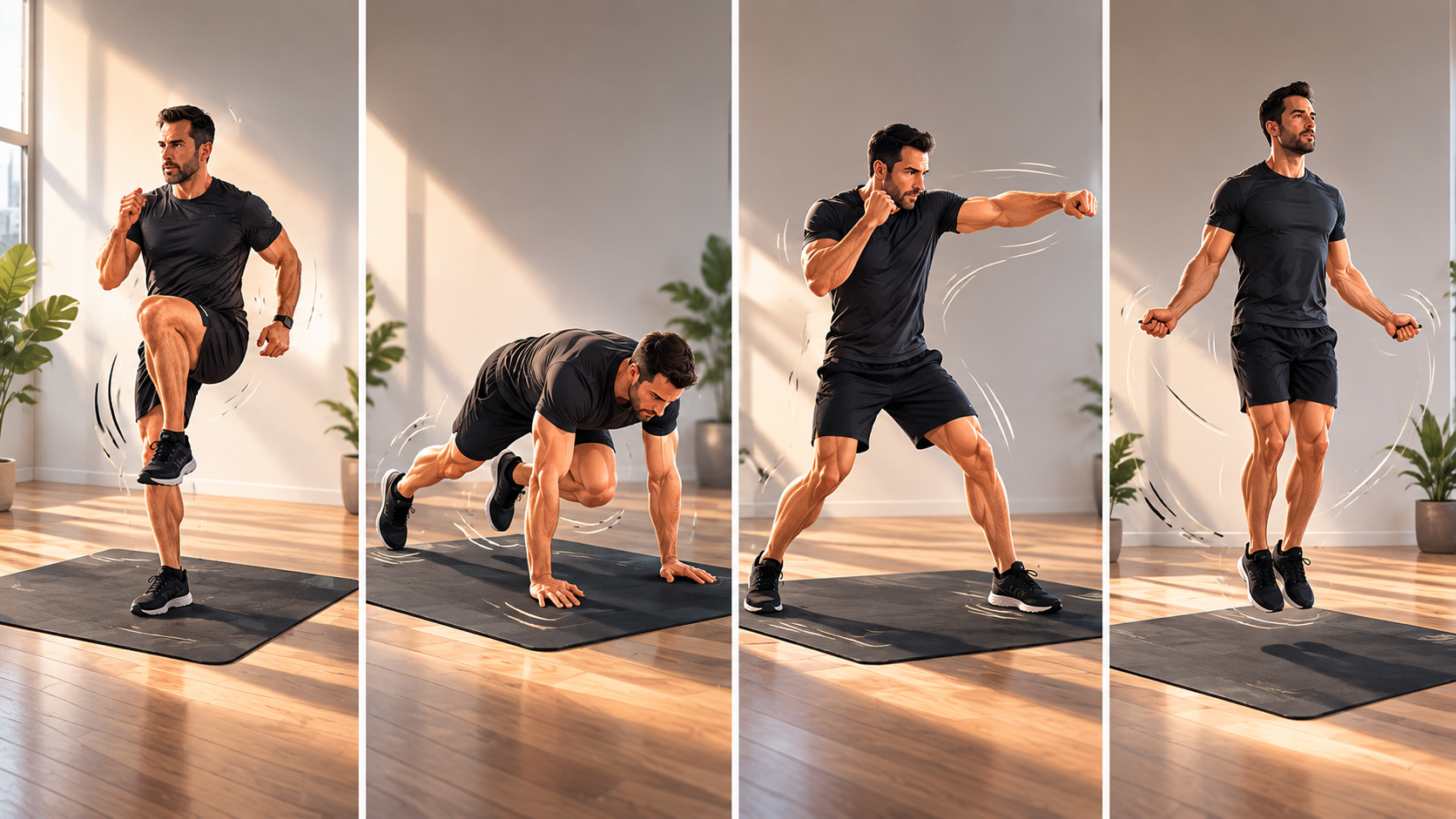
Consider the following four exercises that fit perfectly within a 1.5m by 1.5m area:
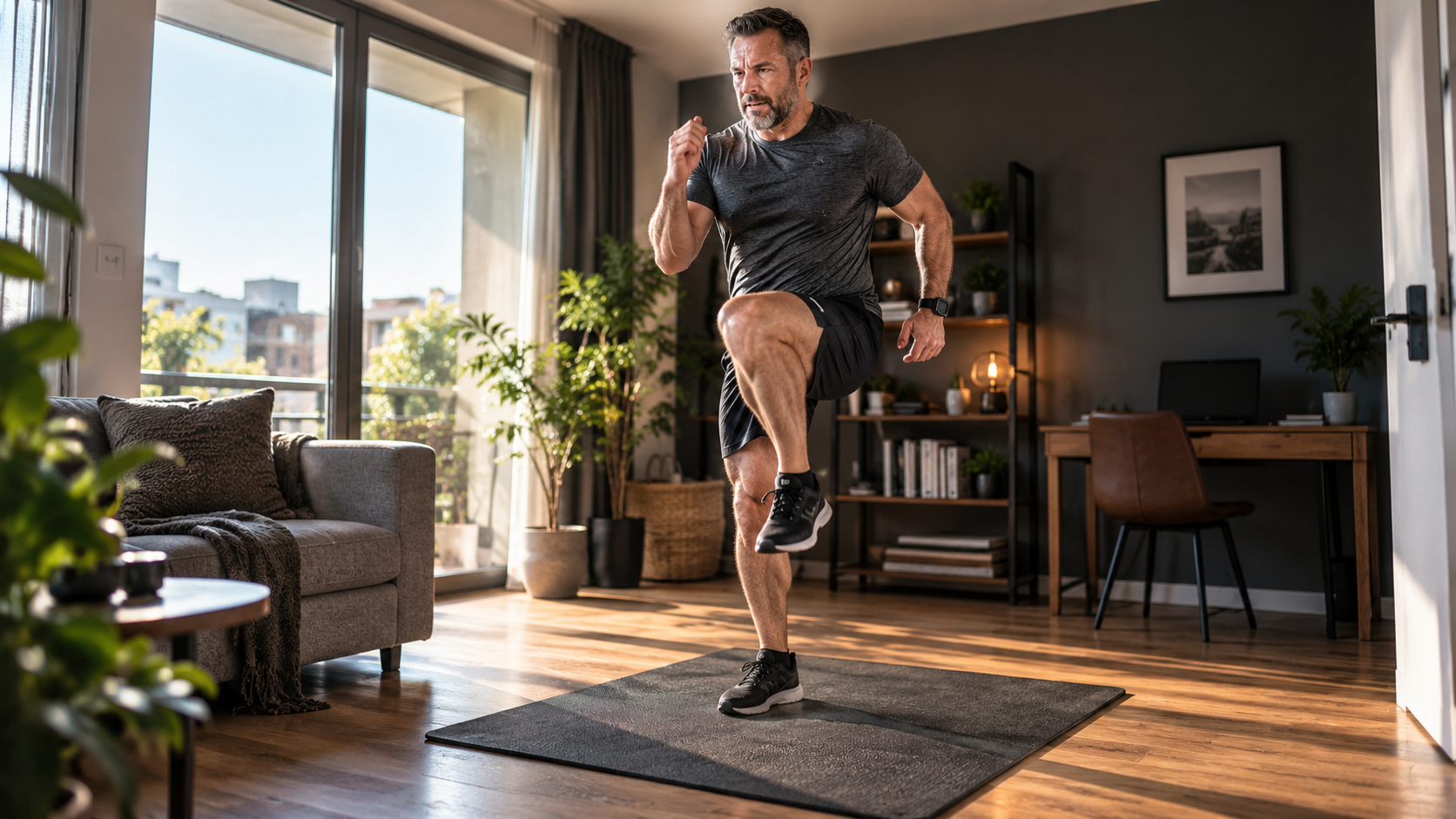
- High-Knee Sprints: Stay in one spot, lifting your knees as high as possible while driving your arms. This mimics the intensity of a 400-metre sprint without moving an inch.
- Mountain Climbers: Start in a high-plank position. These are excellent for heart rate elevation and core engagement. Because your hands stay planted, you remain perfectly stationary.
- Shadow Boxing: Simply standing in a fighting stance and throwing combinations engages your shoulders and core. You can vary the intensity by adding a slight bounce or by switching to focused, heavy-hitting motions.
- Jump Rope (with or without a rope): Even if your ceilings are too low for a standard rope, "ghost jumping" provides the same impact-based cardio benefits. If you have the clearance, a weighted speed rope is a fantastic tool to keep your heart rate spiked during rest periods.

Essential Safety Protocols for Indoor Cardio
Performing high-intensity movements on hard surfaces like tile, laminate, or wood is a recipe for joint issues. Before you begin, the most critical piece of equipment is a high-density, anti-slip exercise mat. You are looking for a mat that provides at least 6mm of cushioning to absorb the shock of landings, particularly if you are performing burpees or jumping movements.
Beyond the floor, always check your immediate surroundings for trip hazards. If you are training near a desk or coffee table, move these items completely out of the two-metre radius. If your space is extremely tight, do not try to "squeeze" in extra movements. It is better to perform three precise, high-intensity movements safely than to risk hitting a piece of furniture during a chaotic, wide-ranging exercise. For those needing specific recommendations on durable, low-profile gear, checking the reviews and curated lists at Smart Small-Space Fitness Guides, Product Reviews, and Tips is a smart way to ensure your setup is both safe and long-lasting.
Structuring a Professional-Grade Circuit
The most effective way to manage a confined-space workout is through Tabata or interval-based protocols. Since you cannot rely on varied machines, your circuit should be structured to keep your heart rate consistently high, preventing the body from settling into a steady state. A standard 20-minute circuit would look like this:
Perform four exercises for 45 seconds each, followed by 15 seconds of rest. After completing all four, rest for 60 seconds. Repeat this loop four times. The intensity comes from the speed at which you execute the movements during that 45-second window. By the third round, your muscles will be burning, and your breath will be short—the hallmark of an effective, efficient cardio session.
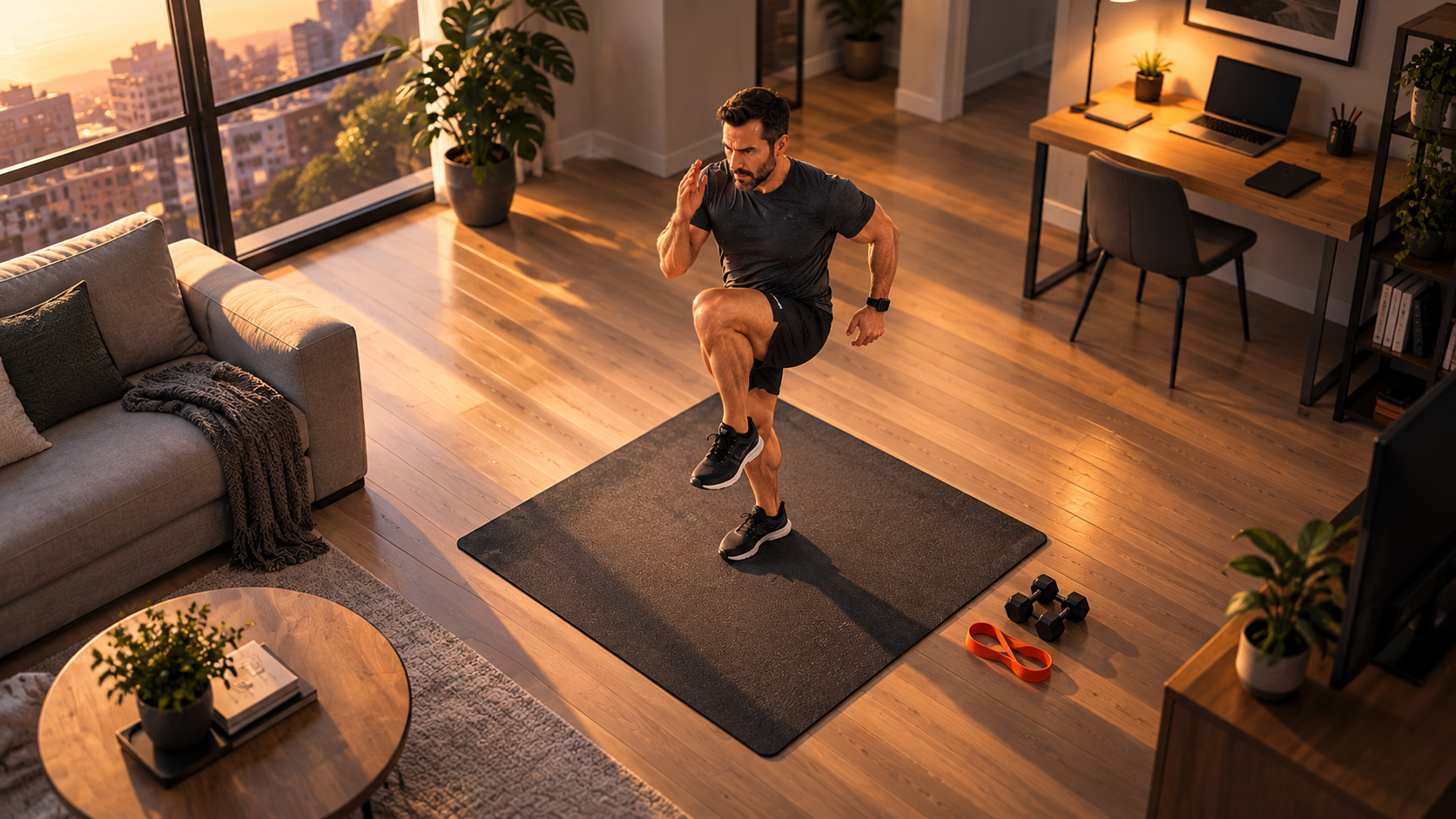
You can vary the difficulty by incorporating resistance bands or light dumbbells. Equipment that offers high versatility without requiring a storage room is vital here. Many compact options that fit these exact requirements can be found at Smart Small-Space Fitness Guides, Product Reviews, and Tips, helping you avoid the common pitfall of over-buying bulky machines that only serve one purpose.
Refining Your Technique and Pacing
The biggest mistake people make in small spaces is rushing the movement to the point where form degrades. Because you are training in a tight area, a loss of balance is more likely to result in a collision with a wall or object. Focus on the 'eccentric' part of your movements—the downward phase of a jump, or the return of a lunge. Controlled descent not only saves your joints from the impact of hitting the floor but also forces the muscle fibres to work harder, further driving up the metabolic cost of your workout.
Consistency in your rhythm is what separates a casual sweat session from a structured cardio routine. Use a timer that provides audible beeps so you aren't constantly checking your phone. By keeping your eyes forward and your focus on the movement, you maintain better posture and prevent the dizziness that can come from constantly looking down at a screen. If you find your heart rate isn't hitting your target zone, shorten the rest intervals rather than trying to increase the complexity of the moves. Mastering these basics within your two-square-metre zone provides a foundation that will serve you better than any expensive, space-consuming machine ever could.

Comments (0)
Post a comment