- Map your home gym in a small space before you
- spend a dollar
- The tape-on-the-floor test that changes everything
- Minimum dimensions for common exercises
- How to orient your workout zone for maximum flow
- Multi-use equipment for a home gym in a small space
- Adjustable dumbbells: one set, dozens of workouts
- Suspension trainers and resistance bands: the zero-footprint workout
- Foldable cardio machines worth the apartment price tag
- Vertical storage: the trick that keeps your room livable
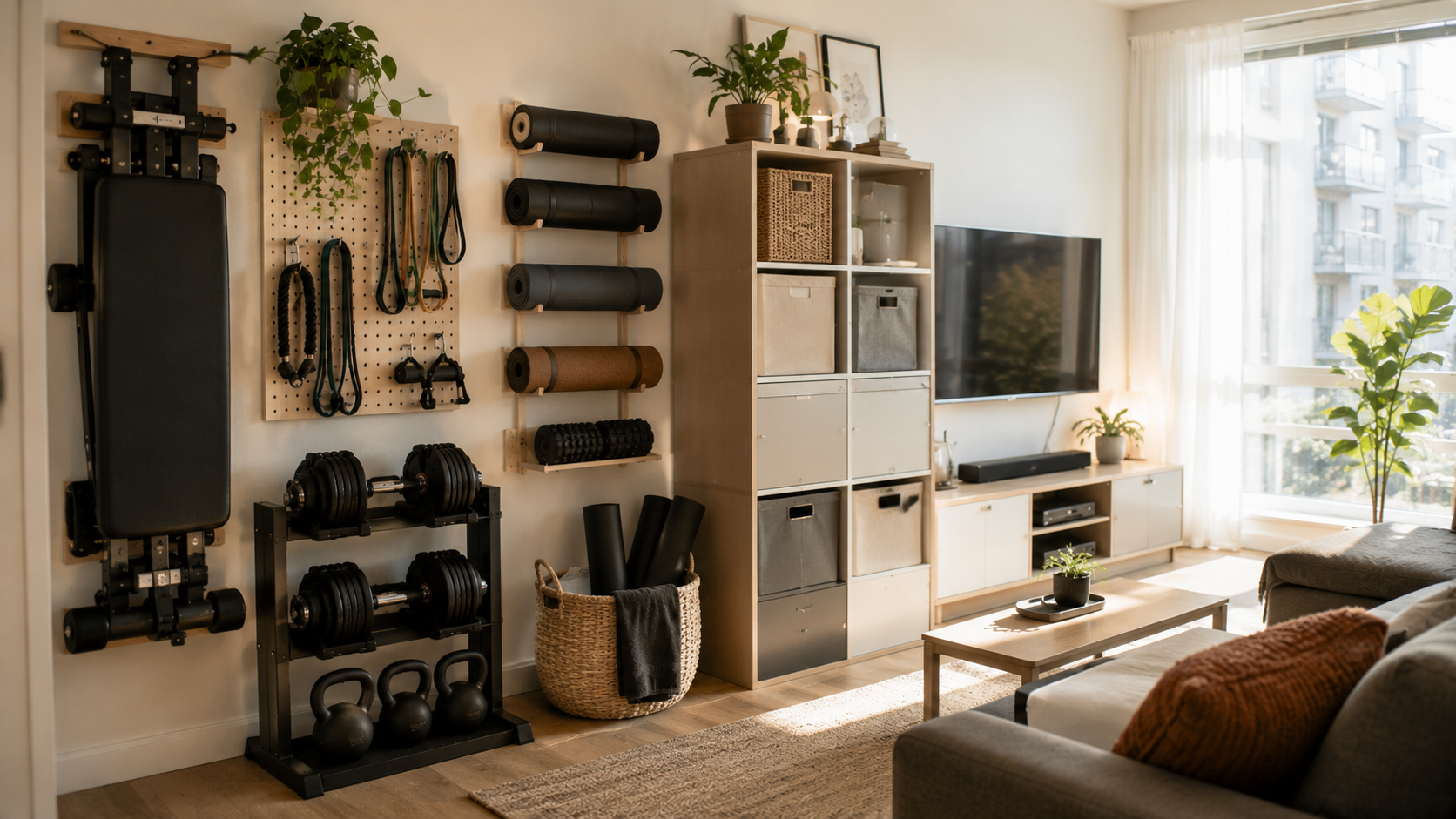
- Wall-mounted and A-frame solutions for weights and benches
- Behind-the-door and pegboard solutions for bands and accessories
- Flooring and noise: two problems with practical fixes
- Choosing gym flooring that protects your apartment floor
- Low-impact swaps for the exercises that shake the ceiling
- What your compact home gym will actually cost
- Low, mid, and premium: what each budget gets you
- How to avoid expensive mistakes when buying space-saving workout equipment
- Your five-step action plan starts today
You want a real workout routine, but setting up a home gym in a small space sounds like a puzzle with missing pieces. Where does the equipment go? Will it annoy your downstairs neighbor? Is there even enough room to swing a dumbbell without knocking over a lamp? Here's the truth: a compact home gym isn't a compromise, it's a smarter version of a gym, because every piece of equipment you choose has to earn its spot. That constraint forces better decisions.
At CompactFitZone, we've spent years testing gear specifically against apartment constraints: noise levels, folded dimensions, versatility per square foot, and real-world price-to-value. You don't have to figure this out through trial and error. By the end of this article, you'll have a layout plan, a curated equipment shortlist, and a budget framework to work from. Step one starts with a roll of painter's tape.
Map your home gym in a small space before you
spend a dollar
The tape-on-the-floor test that changes everything
Before you browse a single product page, grab a roll of painter's tape and mark a rectangle on your floor. This is your workout zone, and it takes about two minutes. Most people are surprised by how much they actually have. A 6×6 ft square, comparable to a small bathroom, is enough for yoga, bodyweight circuits, and resistance band training. If you can clear an 8×10 ft area, you have room for free weights and a folding bench.
The tape test works because it forces you to see real estate in physical terms rather than guesses. Once you see the rectangle on the floor, you'll stop overestimating what you need and start planning around what you actually have.
Minimum dimensions for common exercises
Here are the specific clearances to work with when you're measuring your space. Think of this as your tiny gym layout cheat sheet.
- Squats: 8×8 ft minimum, 10×10 ft for comfort and safe bailout room.
- Deadlifts: 6×8 ft practical minimum, 8×8 ft preferred for safe bar clearance.
- Bench press with a rack: about 8×10 ft, with 3 ft of clearance on each side of the bench.
- Jumping rope: 6×6 ft at the minimum, 6×8 ft if you have a longer stride or higher jump.
- Yoga: a standard mat is 6×2 ft, but a 6×6 ft zone gives you room to move through flows comfortably.
The absolute floor for a functional apartment gym setup is 36 square feet, roughly that 6×6 ft tape rectangle. A more versatile range is 50 to 80 square feet. If you have an 8×8 ft zone available, you can do almost everything covered in this article.
How to orient your workout zone for maximum flow
Placement matters as much as size. Put cardio machines against a wall to keep the center of the room clear. Store weights near where you'll use them, ideally against the same wall as your storage rack.
Keep the central floor area open for bodyweight and band work, since that's where you'll spend the most time moving around.
In a rectangular room, orient your longest equipment piece parallel to the longest wall to avoid blocking paths through the room.
Multi-use equipment for a home gym in a small space
Adjustable dumbbells: one set, dozens of workouts
If you buy one piece of strength equipment for a small apartment gym, make it adjustable dumbbells. The Bowflex SelectTech 552, priced around $429, covers 5 to 52.5 lbs per dumbbell across 15 settings. That single pair replaces what would otherwise be a full rack of fixed-weight dumbbells. Each dumbbell measures approximately 15.75" × 8" × 9", about the size of a large shoebox, and the pair stores on a compact stand that takes up less floor space than a nightstand.
Fixed-weight dumbbells are cheaper per pair, but once you need more than two or three weight options, the cost and floor space balloon fast. The math is simple: one adjustable set versus a rack of 10 fixed pairs. In a small room, the adjustable set wins on both footprint and cost.
Suspension trainers and resistance bands: the zero-footprint workout
The TRX Home2 System, at around $230, anchors to a door and handles a full-body workout. When you're done, it folds into a bag the size of a clutch purse.
Resistance bands take this even further: a quality set costs under $30 and stores in a single drawer. These two tools together cover pulling, pushing, hinging, squatting, and core work with zero permanent floor footprint. For anyone just starting to build their apartment gym setup, this combination is the best possible first purchase.
Foldable cardio machines worth the apartment price tag
The two most apartment-compatible cardio options are walking pad treadmills and compact stationary bikes. Walking pads are the sweet spot for small home gym ideas: models like the WALKINGPAD X Series measure around 40 dB during use, which is quieter than a normal conversation. They fold flat and slide under a bed or stand upright against a wall. Stationary bikes are often quieter since there's no belt impact, though exact noise levels vary by model and drive type, and most have a smaller footprint than a standard treadmill.
Before buying any foldable cardio machine, check its folded dimensions, not just its running dimensions. These numbers are often buried in the specs. CompactFitZone tests folded footprints and actual noise levels in real apartment conditions, measured at normal operating speeds, not just the slowest setting, so the numbers reflect what you'll actually hear through your floor. Check those reviews before committing to a model.
Vertical storage: the trick that keeps your room livable
Wall-mounted and A-frame solutions for weights and benches
A wall-mounted dumbbell rack uses zero floor space and keeps weights off the ground entirely. If you're renting and can't drill into studs, a vertical A-frame rack is the next best thing. These stand at roughly 2×2 ft, a tiny footprint for holding a full dumbbell set.
For folding benches, look for models designed to stand on their end vertically. A bench parked upright against a wall takes up about the same space as a narrow door.
Behind-the-door and pegboard solutions for bands and accessories
A single carabiner clipped to a door hook keeps all your resistance bands tangle-free and out of sight, no drawer rummaging, no pile on the floor.
For larger accessory collections, a pegboard panel mounted to one wall gives you a configurable multi-hook system for bands, jump ropes, foam rollers, and anything else that tends to migrate around a room.
The difference between a gym corner and a cluttered room is almost always concealment. Closed cabinet storage or behind-the-door systems mean the equipment disappears when you're not using it, and the room stays livable for everything else.
Pegboard hooks and over-door organizers are available in standardized widths that fit most interior doors.
Flooring and noise: two problems with practical fixes
Choosing gym flooring that protects your apartment floor
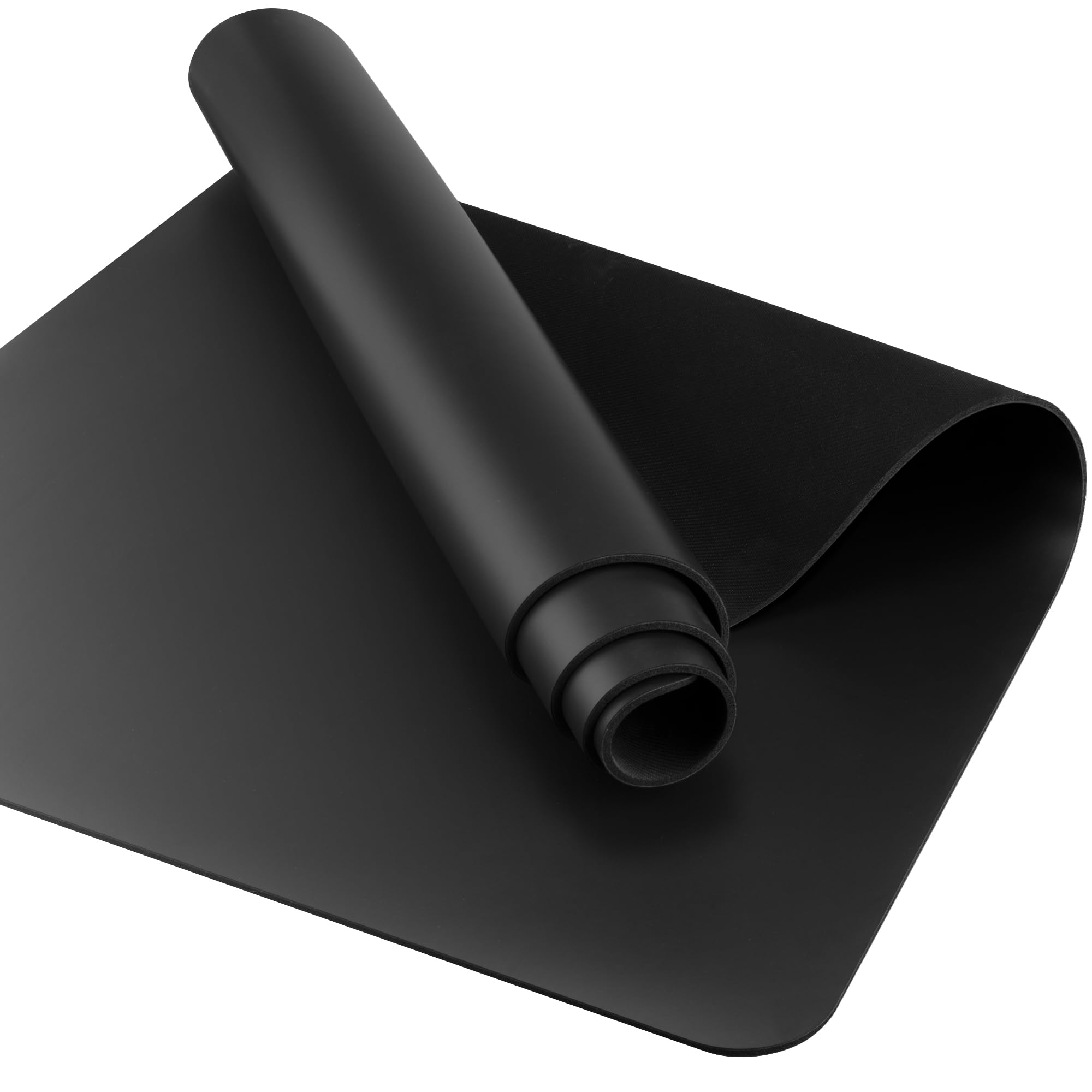
Gym flooring is a one-time investment that protects both the apartment floor underneath and your joints on top. The three main options each have a specific use case. Interlocking rubber tiles in the 3/8" to 1/2" range are the best choice for free weights and general lifting.
Foam puzzle mats work well for yoga, band work, and light bodyweight training on a budget. A single large rubber gym mat in that same 3/8" to 1/2" thickness defines a clean workout zone and handles most apartment exercises.
For regular use with moderate to heavy dumbbells, rubber outperforms foam, foam compresses over time and loses its ability to absorb impact.
For heavy lifts above 50 lbs, move up to 3/4" rubber for real floor protection. The higher the load, the thicker the rubber you need.
Low-impact swaps for the exercises that shake the ceiling
High-impact moves are the main source of neighbor complaints, but most of them have quiet alternatives that deliver the same training effect.
Step touches replace jumping jacks with zero floor impact. Slow-tempo squats replace jump squats while actually increasing time under tension.
A walking pad at moderate speed replaces running with a noise level that rarely exceeds 45 dB. These aren't lesser versions of the exercises, they're the apartment-smart versions.
A well-designed apartment gym setup factors noise into the plan from day one, not as an afterthought when you get a knock on the door.
Combine the right flooring, low-impact movement patterns, and a quiet cardio machine, and you have the complete solution.
What your compact home gym will actually cost
Low, mid, and premium: what each budget gets you
There's a functional setup available at every budget level. Here's what each tier realistically looks like.
- Low ($150 to $500): resistance bands, a yoga mat, adjustable dumbbells, and basic gym flooring. This is a complete setup for bodyweight training, band work, and light strength exercises.
- Mid ($500 to $1,500): higher-quality adjustable dumbbells like the Powerblock 24 lbs, a folding bench, a pull-up bar, rubber flooring, and a walking pad treadmill. This is where most apartment gym setups land.
- Premium ($1,500 to $3,000+): an all-in-one compact machine like the Speediance Gym Monster at around $1,500 to $2,000, full rubber flooring coverage, and a complete dumbbell system. This is the closest to a commercial gym feel without leaving your apartment.
A well-rounded setup for most people lands around $600 to $900. That mid-range budget covers strength training, cardio, and flooring without overspending on features you won't use.
How to avoid expensive mistakes when buying space-saving workout equipment
The most common buying mistake is choosing based on specs alone and then discovering the machine is louder than expected, or that it doesn't actually fit the space when assembled.
Folded dimensions and running dimensions are different numbers, and noise figures on spec sheets are often measured under ideal lab conditions rather than at normal operating speeds in a real room.
CompactFitZone's reviews evaluate every product against real apartment criteria: actual footprint, real-world noise levels, and versatility relative to the space it takes up. The small-space filter is built into every recommendation, so you're not starting from scratch.
A five-minute read can save you the headache of a return and the cost of a piece of gear that doesn't work for your actual room.
Your five-step action plan starts today
Building a home gym in a small space is absolutely achievable, and it's usually faster to set up than people expect. The gap between "thinking about it" and "working out regularly" comes down to a few good decisions made in the right order:
Measure your available space with the tape test.
Choose multi-use gear that covers multiple movement patterns.
Solve storage vertically to protect your floor area.
Lay proper flooring before the first workout.
- Match your budget to a specific tier before you browse.
Start with the tape test today. Mark that 6×6 ft rectangle on your floor and stand inside it. That's your gym. Everything else is just filling it with the right tools. When you're ready to pick your first piece of space-saving workout equipment, CompactFitZone's curated selections are filtered specifically for apartment constraints, every option has already passed the noise, footprint, and versatility checks that matter in a real home.

Comments (0)
Post a comment